Case study / Sparks Amani
Practical AI for peace starts with people.
Sparks Amani brings our experience in practical training and local-language AI to a concept for evidence-led community response in Kenya.
AI can help organise evidence. People must evaluate it, explain uncertainty and decide what happens next.
Read the story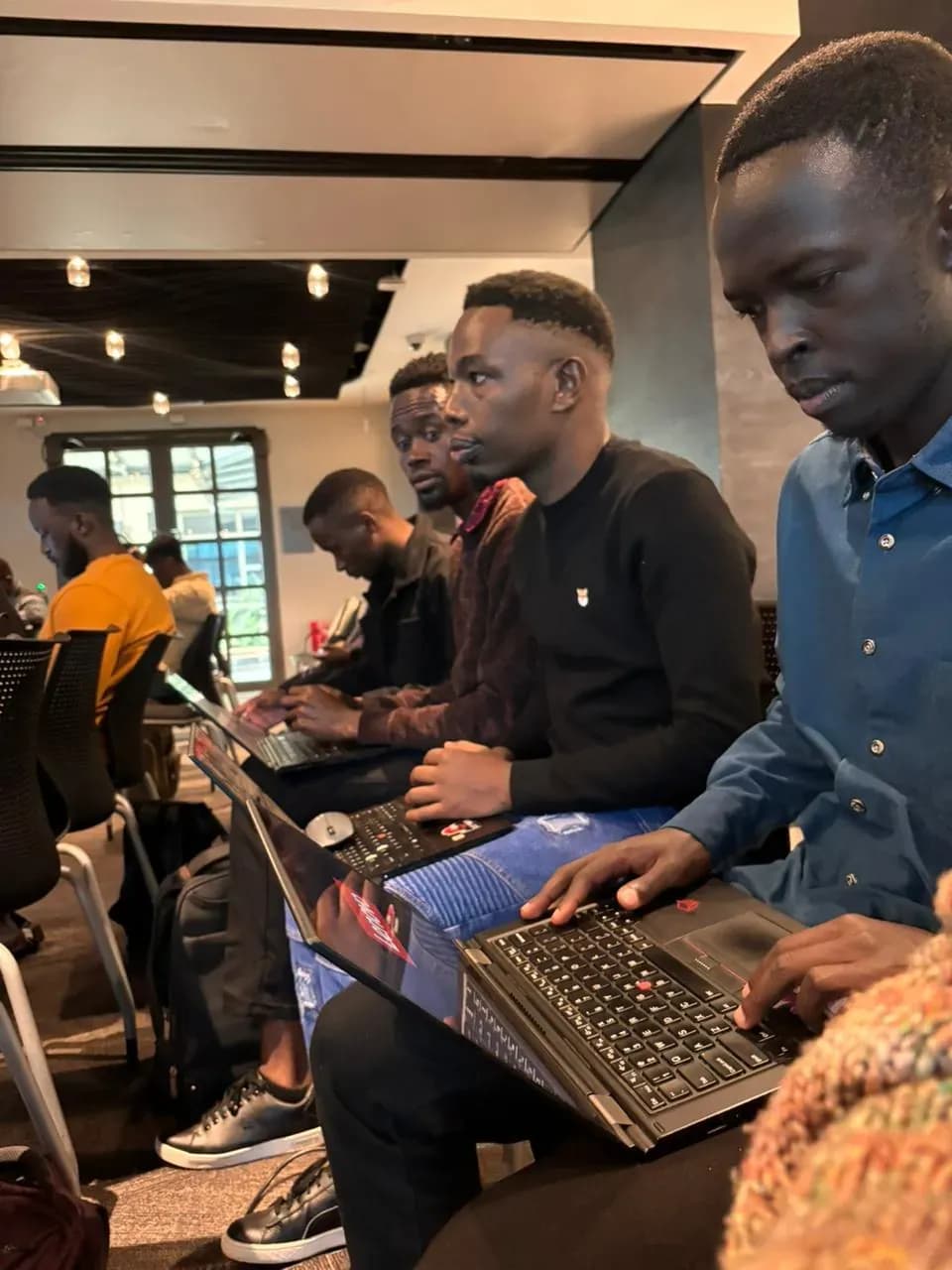
The workflow
From a question to a reviewed response.
- 01
Learn
Practise finding sources, checking context and recognising uncertainty.
- 02
Gather evidence
Bring together source material, dates, contradictions and open questions.
- 03
Review
A trained person assesses the evidence and decides whether it supports an explanation.
- 04
Explain and correct
Publish a reviewed response with its sources, uncertainty and a path to correction.
Built on experience
Training and local knowledge belong at the centre.
Our team has shared practical skills through university sessions, including Moi University, Localhost events, hackathons and Ujuzi Hub. The training pictured here was under Ujuzi Hub, with McoChieng Labs and the Kenya Microsoft Fabric Community. Participants learned by working through ideas together.
Our Shiriki work involving Swahili, Dholuo and Gikuyu informs our approach to language. Every new task still needs its own evaluation and review by qualified speakers, especially where meaning depends on context, quotation or code-switching.
Responsible by design
Human judgement, privacy and room to disagree.
Live operation would require agreed editorial, language, safeguarding and community roles. A responsible system must protect private information and allow an answer of insufficient evidence. It is not an emergency service, a surveillance system or an automated censorship tool.
This case study describes a concept informed by real training and engineering experience. Sparks Amani has not been deployed as a peace programme, and its impact remains to be evaluated.
Explore our AI capabilitiesFrom skills to systems
What a responsible implementation would involve.
Design around real questions
Start with the information needs, trusted sources, languages and response practices of the people who would use the system. Train participants to trace original material, compare sources and explain what remains uncertain.
Keep evidence and decisions visible
An evidence workspace could record sources, dates, contradictions and reviewer notes separately from AI suggestions. A human reviewer would decide whether to approve an explanation, seek more evidence or withhold a conclusion.
Measure learning and improve
Practical exercises before and after training, citation checks, correction records and reviewer feedback can show where the process works and where it needs improvement. Attendance or report counts alone do not establish a peace outcome.
Training in practice
Learning together, in pictures.
These photographs show the practical training experience that informs our approach.
Bring thoughtful AI into your work.
Talk to us about training, local-language AI or building a human-led evidence workflow.
Start a project